Real Estate Didn’t Miss the AI Revolution—We Entered It at the Right Time
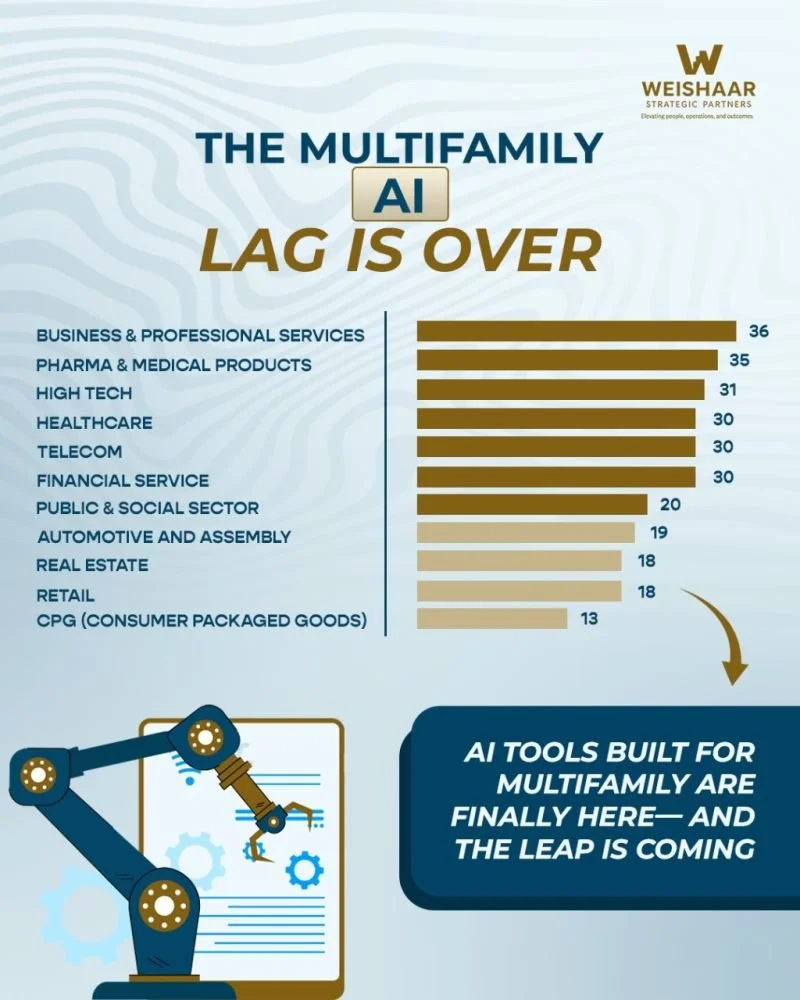
If you followed the headlines over the past few years, you might think real estate “missed” the first wave of artificial intelligence. Tech companies raced ahead with generative models. Retail and e-commerce rolled out recommendation engines and chatbots. Healthcare experimented with diagnostic tools. And real estate particularly multifamily looked like it was sitting on the sidelines.
But sitting in the AI sessions at YASC 2025 last week, I realized that what seemed like a lag may actually be our advantage.
We didn’t miss the AI revolution. We waited for the right part of it.
Why the Slow Start Was Strategic
Multifamily operations are uniquely complex. We manage not just buildings but communities. Each property comes with its own financing structure, compliance requirements, ownership expectations, and resident needs. A single decision can ripple through budgets, compliance files, maintenance systems, and resident satisfaction scores.
The early wave of AI chatbots, content generators, and predictive models built for consumer industries wasn’t ready for that level of nuance. Dropping those tools into property management would have been like trying to run a high rise on a home thermostat. It looked modern but didn’t fit the system.
Instead, most operators held back. We stayed focused on fundamentals: occupancy, compliance, NOI. We watched other industries experiment. And now, the timing is turning in our favor.
The Tools Are Finally Ready
Today’s AI tools are being built with our complexity in mind. Lease up platforms that integrate with compliance. Maintenance triage systems that connect work orders to vendor networks in real time. Resident service tools that don’t just spit out generic answers but pull from property specific data.
At YASC, I sat with developers and product teams who weren’t just excited about AI in the abstract. They were excited about making it work for multifamily. They understood our pain points fragmented systems, siloed teams, outdated processes and were designing solutions to fit them.
That’s the shift. We’re no longer trying to shoehorn someone else’s technology into our world. We’re shaping technology around what makes our world unique.
Lessons From Lagging Behind
The temptation when a new technology arrives is to jump in early. Some industries benefitted from that with AI. But many also burned time, money, and credibility chasing shiny tools that didn’t stick.
Our slower start offers three advantages:
- We get to skip the false starts. Instead of funding experiments that collapse under operational complexity, we can implement tools already tailored to our needs.
- We can build with intention. AI isn’t a plug-and-play solution. It works best when integrated into clear processes. Our delay gives us the chance to align people, systems, and workflows before adding automation.
- We can focus on impact, not novelty. Real estate doesn’t need to prove it’s innovative for innovation’s sake. We need to improve compliance accuracy, reduce burnout, and enhance resident experience. Those outcomes matter more than being first.
The Human Side of AI
After two decades leading multifamily operations, I’ve learned that no system succeeds without people. The same will be true with AI.
The best tools won’t replace leasing agents, compliance specialists, or maintenance managers. They’ll amplify them. They’ll handle the repetitive tasks, the after hours responses, the data validation that currently eats into human bandwidth. That frees people to do what only people can: build trust, solve problems, and create community.
But this only happens if leaders approach AI with intention. Dropping tools on teams without training, context, or process will only create noise. Building AI into the operational rhythm structured feedback loops, workload transparency, clear escalation paths is how it becomes an asset instead of a distraction.
What Leaders Should Do Next
If you’re leading in this space, the question isn’t whether AI belongs in multifamily. It’s how to integrate it in ways that respect both the people and the process.
Here are three starting points I took away from YASC:
- Map the pain points. Before chasing tools, identify the operational bottlenecks costing the most in time, money, or resident satisfaction. AI should target those, not create new ones.
- Pilot intentionally. Start small. Choose a property or region where you can test, measure, and refine. Scale only once the process is proven.
- Invest in people. The best ROI on AI comes when staff are trained to use it confidently. That means education, coaching, and building trust that the technology is here to help, not replace.
From Lag to Leap
For years, I’ve heard people say real estate was “behind” on technology. Maybe in adoption speed, that was true. But leadership isn’t about being first it’s about being right.
Now the timing is right. The tools are aligned. The demand is real. And the leap is coming.
The portfolios and organizations that will thrive in this new chapter won’t be the ones with the flashiest demos. They’ll be the ones who know their people, know their processes, and integrate AI in ways that make both stronger.
That’s how we’ll turn what looked like a lag into a leap. And that’s how we’ll shape the future of multifamily not by chasing someone else’s playbook, but by writing our own.